Never Miss a Call Again: How an AI Receptionist Works for Small Businesses
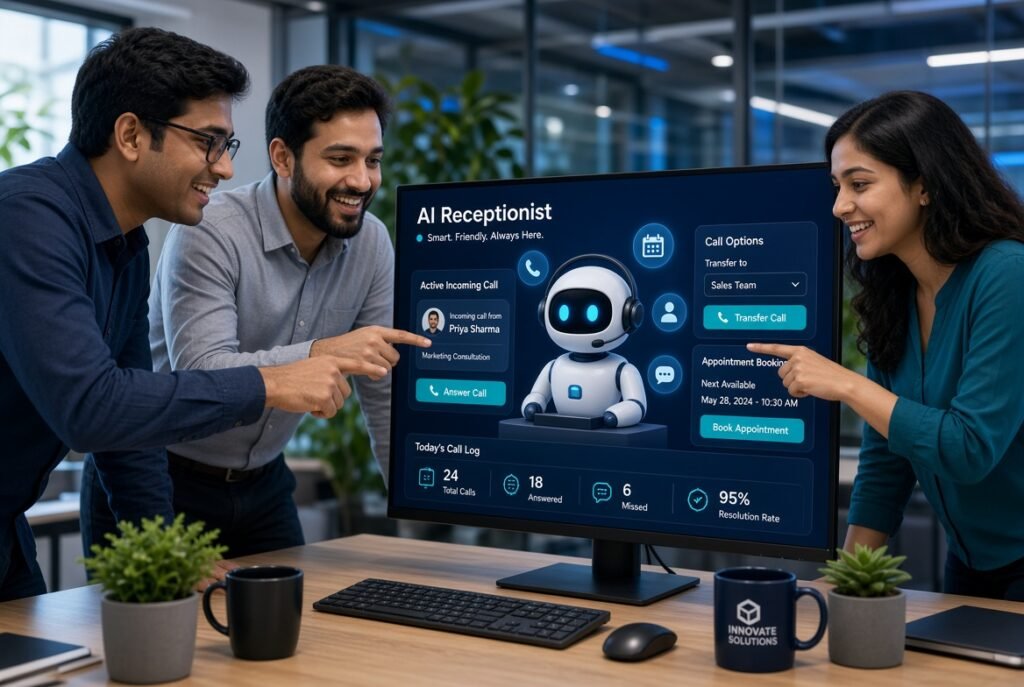
For many small businesses, the phone is still where the most valuable conversations happen: a new customer ready to book, a client with an urgent question, a supplier with a delivery problem. Yet phones ring at the worst moments — during appointments, at lunch, after closing, while you’re already on another call.
Every missed call is a potential customer who may simply ring the next business on the list. An AI receptionist is designed to close that gap. Here’s what it is, what it can realistically do, and how to decide whether it’s right for you.
What is an AI receptionist?
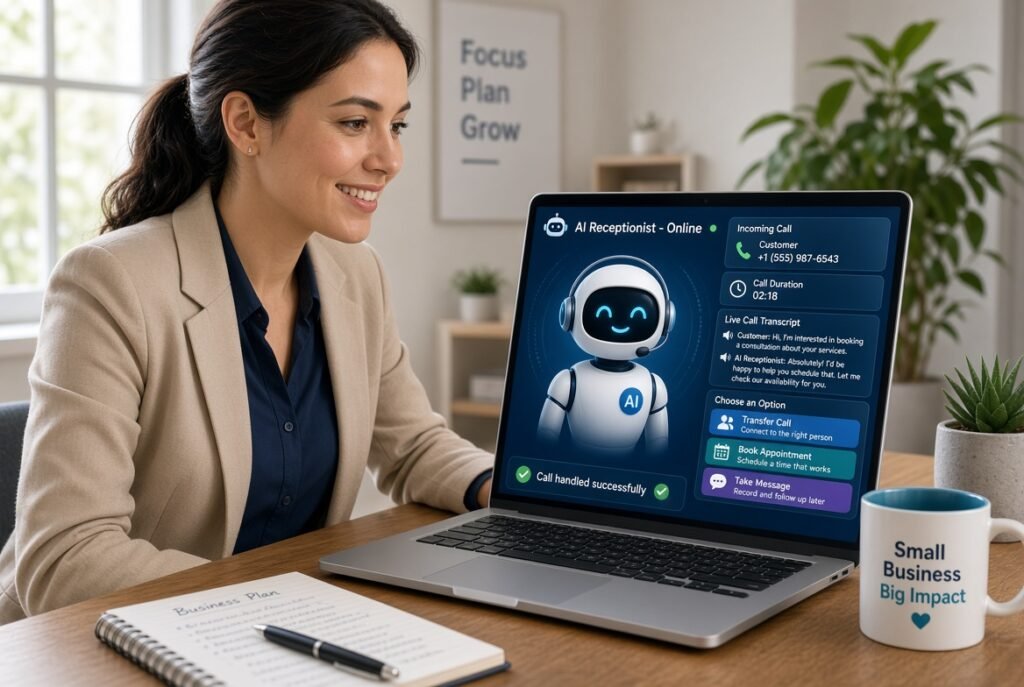
An AI receptionist is a voice assistant that answers your business phone line in natural, conversational speech. Unlike old-style phone menus (“press 1 for sales”), callers simply say what they need, and the assistant responds — answering questions, taking details or booking appointments, then passing anything important to your team.
What it can handle
- Answering common questions: opening hours, location, services, prices and policies, based on information you provide.
- Booking and rescheduling appointments: connected to your calendar or booking system, it can offer available slots and confirm them.
- Taking messages properly: capturing the caller’s name, number and reason for calling, then sending a clear summary by email, SMS or WhatsApp.
- Qualifying new enquiries: asking a few questions so your team knows which leads to call back first.
- Routing urgent calls: transferring calls to the right person when something needs immediate attention.
- Covering after-hours and busy periods: answering when you can’t, rather than sending callers to voicemail.
What it should not handle
An AI receptionist works best with clear boundaries. Route these to a person:
- Complaints and emotionally charged conversations
- Anything requiring payment details over the phone
- Medical, legal or financial advice
- Unusual requests that fall outside its instructions
The best AI receptionist doesn’t pretend to be your whole team. It makes sure every caller is heard, and that your team calls back the right people first.
Traditional options vs an AI receptionist
| Voicemail | Human receptionist | AI receptionist | |
|---|---|---|---|
| Availability | 24/7, but no conversation | Working hours | 24/7 |
| Handles several calls at once | No | No | Yes |
| Books appointments | No | Yes | Yes, when connected to your calendar |
| Handles complex or sensitive calls | No | Yes | Hands over to a person |
| Ongoing cost | Very low | Highest | Typically between the two |
For many businesses the strongest setup is a combination: people handling calls during core hours, with an AI receptionist covering overflow, lunch breaks and after-hours.
Businesses that benefit most
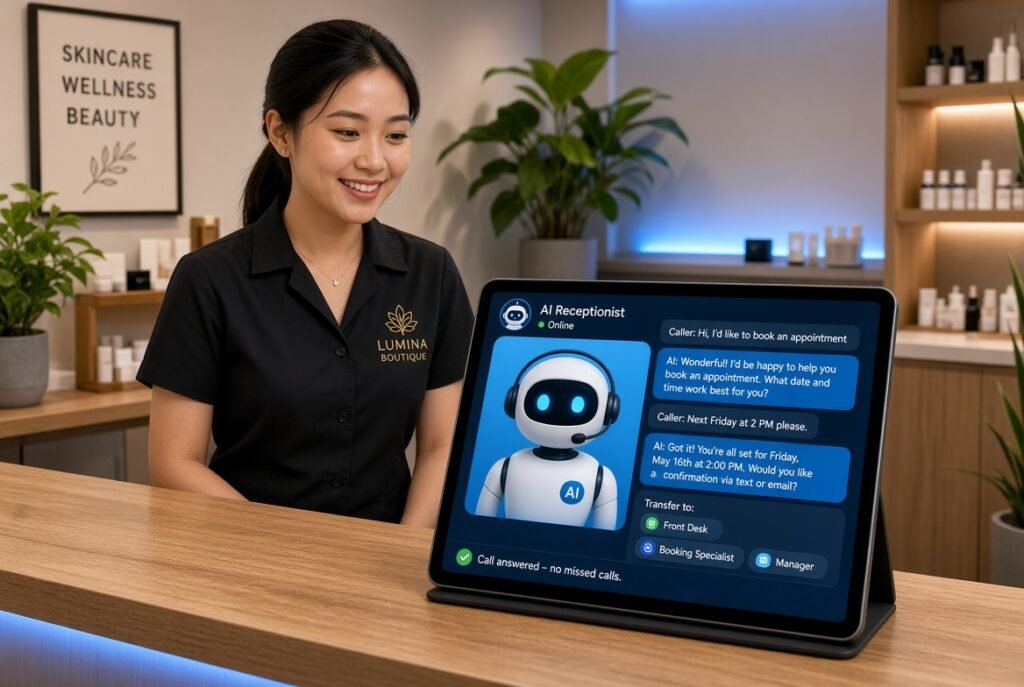
- Clinics, salons and studios where staff are with clients and can’t pick up the phone.
- Trades and field services where the owner is on site most of the day.
- Restaurants taking reservations and answering the same questions at peak times.
- Real estate, legal and professional services where a missed enquiry can mean a lost client.
- Retail and e-commerce fielding order, delivery and returns questions.
How to set one up well
- List your most common calls. Note the top reasons people phone you and the answers you give.
- Decide what it can and can’t do. Be explicit about bookings, prices, promises and when to transfer.
- Connect the essentials. Calendar, booking system and the channel where you want message summaries delivered.
- Choose the voice and greeting. Match your brand, and support the languages your customers speak.
- Be upfront. Let callers know they are speaking with an AI assistant, and always offer a route to a person.
- Test, then review. Make test calls with real scenarios, then review call summaries weekly in the first month.
How to tell if it’s working
- Fewer missed calls and voicemails
- More appointments booked outside business hours
- Faster callback times on important enquiries
- Positive (or at least neutral) caller feedback
- Less time staff spend interrupted by routine calls
Final thought
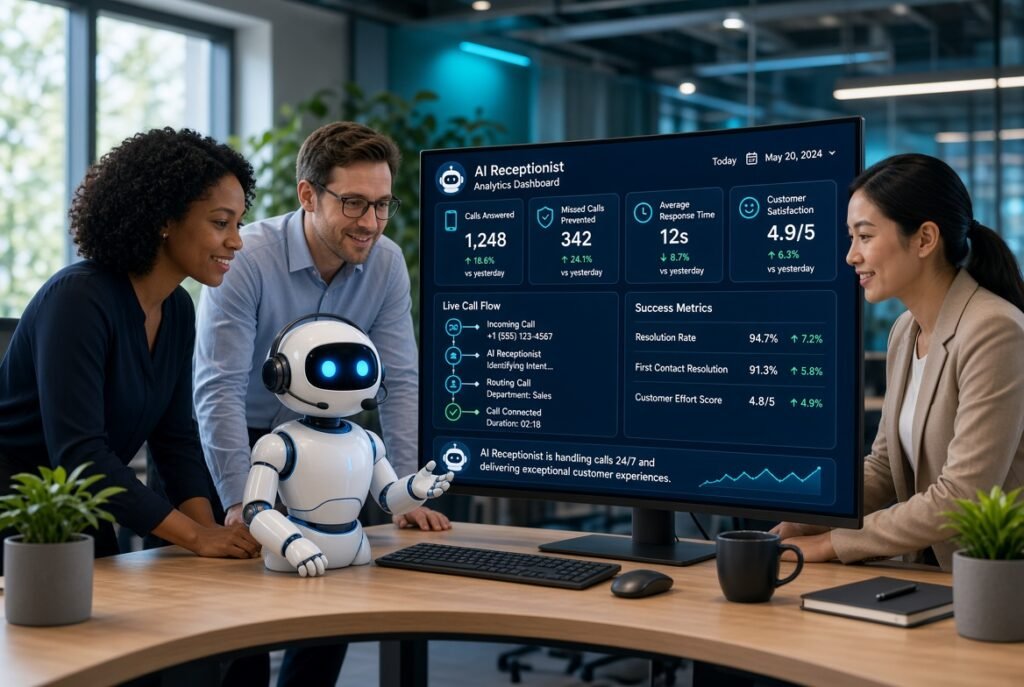
An AI receptionist isn’t about replacing the warmth of a real person on the phone. It’s about making sure no caller is ignored — and that when your team does pick up, they’re focused on the conversations that matter most.
Curious how an AI receptionist would work for your business? See our AI receptionist service or book a free consultation.
Frequently asked questions
Is it legal to use an AI voice on business calls?
Answering your own inbound calls is not the same thing as making robocalls, but the rules around AI voices are worth knowing. In February 2024 the US Federal Communications Commission issued a Declaratory Ruling that calls using AI-generated voices count as “artificial” voices under the Telephone Consumer Protection Act, the law that governs unsolicited outbound calling. If you are also planning outbound campaigns, take proper legal advice first. We are not lawyers and this is not legal advice.
Should it tell callers they are speaking to an AI?
Yes. Disclosure costs you very little and concealment costs a great deal if a caller works it out, which they usually do. It also makes the handover to a person feel normal rather than like a correction.
What happens if someone calls with an emergency?
Those calls should transfer to a person immediately, and the rules for which ones qualify are set before launch rather than discovered afterwards. Anything urgent, distressed or ambiguous belongs with your team.
Will it work with our existing phone number?
Usually, through call forwarding, so you keep your number and can switch the forwarding off at any time. We go through the setup on our AI receptionist page.
Related reading
- AI chatbots for small business — the same idea applied to typed conversations on your website.
- Tasks a small business can automate with AI — what to do with the enquiries once they have been captured.
- An AI data privacy checklist for small businesses — what to confirm about call recordings and transcripts before you start.
Sources
- US Federal Communications Commission, Declaratory Ruling on AI-generated voices — rules that calls using AI-generated voices count as “artificial” voices under the Telephone Consumer Protection Act.
- NIST, Artificial Intelligence Risk Management Framework (AI RMF 1.0) — a voluntary US framework built around four functions, Govern, Map, Measure and Manage.